01 /Case Study · SaaS · CRO
Dropbox's SEM pages were builtfor Google, not for buyers.
As part of an ongoing retainer at PMG, I led the design of a new baseline landing page for Dropbox's non-branded SEM campaigns. The redesign delivered a statistically significant +9% lift in trial starts and was implemented as the new baseline.
Senior UX Designer
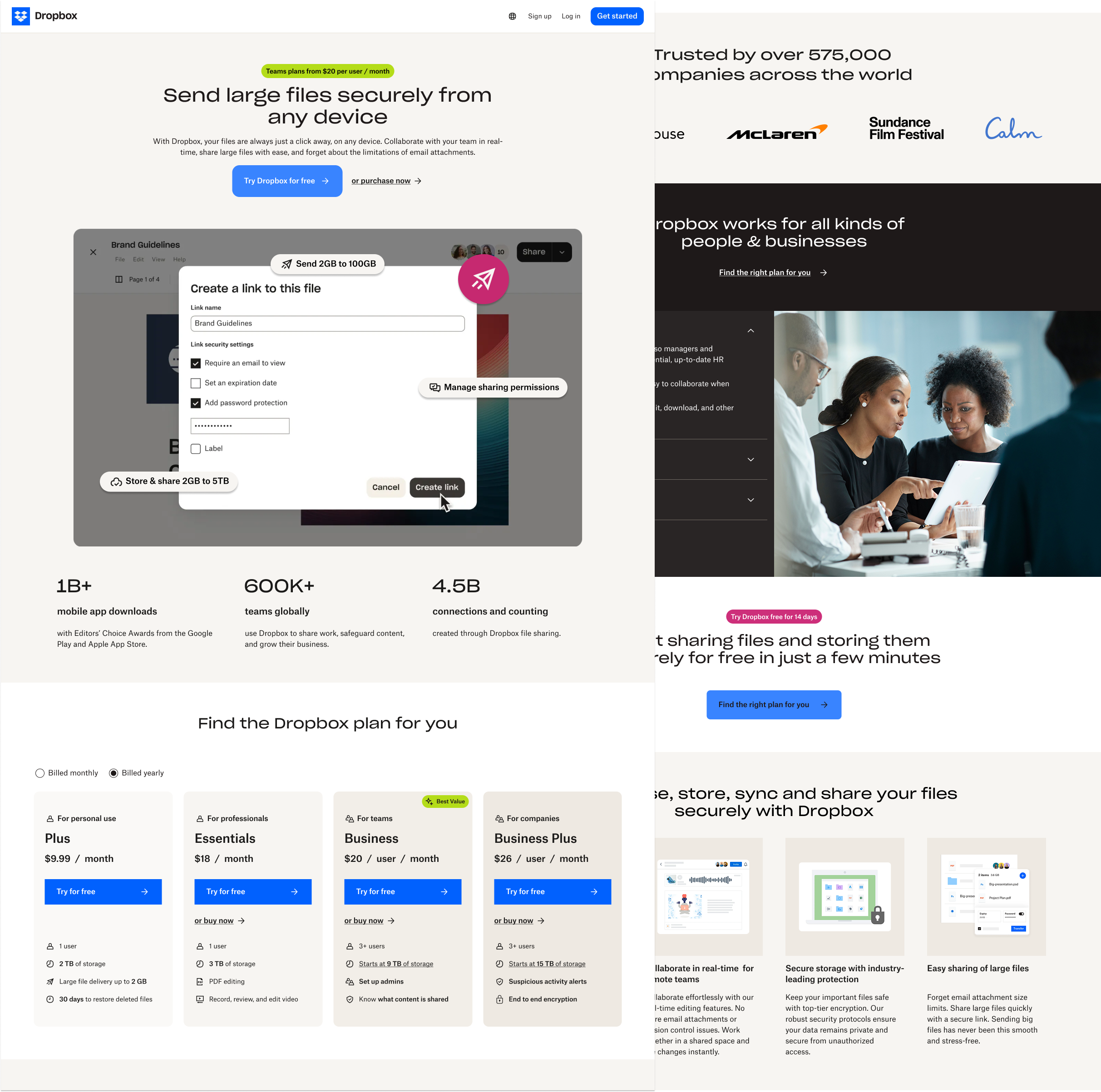
Dropbox's paid media team came to us with low-converting pages, built to rank on Google, not to convert paid media traffic. Pages were hard to scan, value propositions were unclear, and there was no visibility into what competitors were doing differently.
The task: identify what was blocking conversion and redesign for it.
A note on constraintsNote: Dropbox's design system is tightly controlled with limited component variants. Our design decisions were focused on content, messaging and imagery rather than component-level changes.
- 01Competitor review
I analysed 10 SaaS competitors including Notion, Box, NordLocker and Google, logging 900+ observations, surfacing 82 thematic insights and producing 32 actionable recommendations covering language, layout and psychological tactics.
- 02User testing
I analysed all 12 unmoderated user test recordings, conducted with core audience segments via UserTesting.com, mapping the full journey from SEM landing page to checkout.
- -Designed a new landing page for high-intent users arriving via focused SEM campaigns.
- -Used social proof, authority stats and customer logos to build instant trust and signal that others benefit from Dropbox.
- -Established the key value proposition clearly and early, as user testing showed it wasn't landing on the original page.
- -Introduced progressively disclosed messaging for Dropbox's key audience segments, so each persona saw content directly relevant to their needs.
Price shown early
The brief was clear: NB SEM visitors arrive without brand familiarity, having searched a feature keyword, not Dropbox. Competitor research showed that surfacing a ‘From £xx’ price point above the fold was standard practice, and that users who couldn’t find pricing quickly dropped off. We surfaced price early to set expectations and filter for high-intent users before they got further down the page.
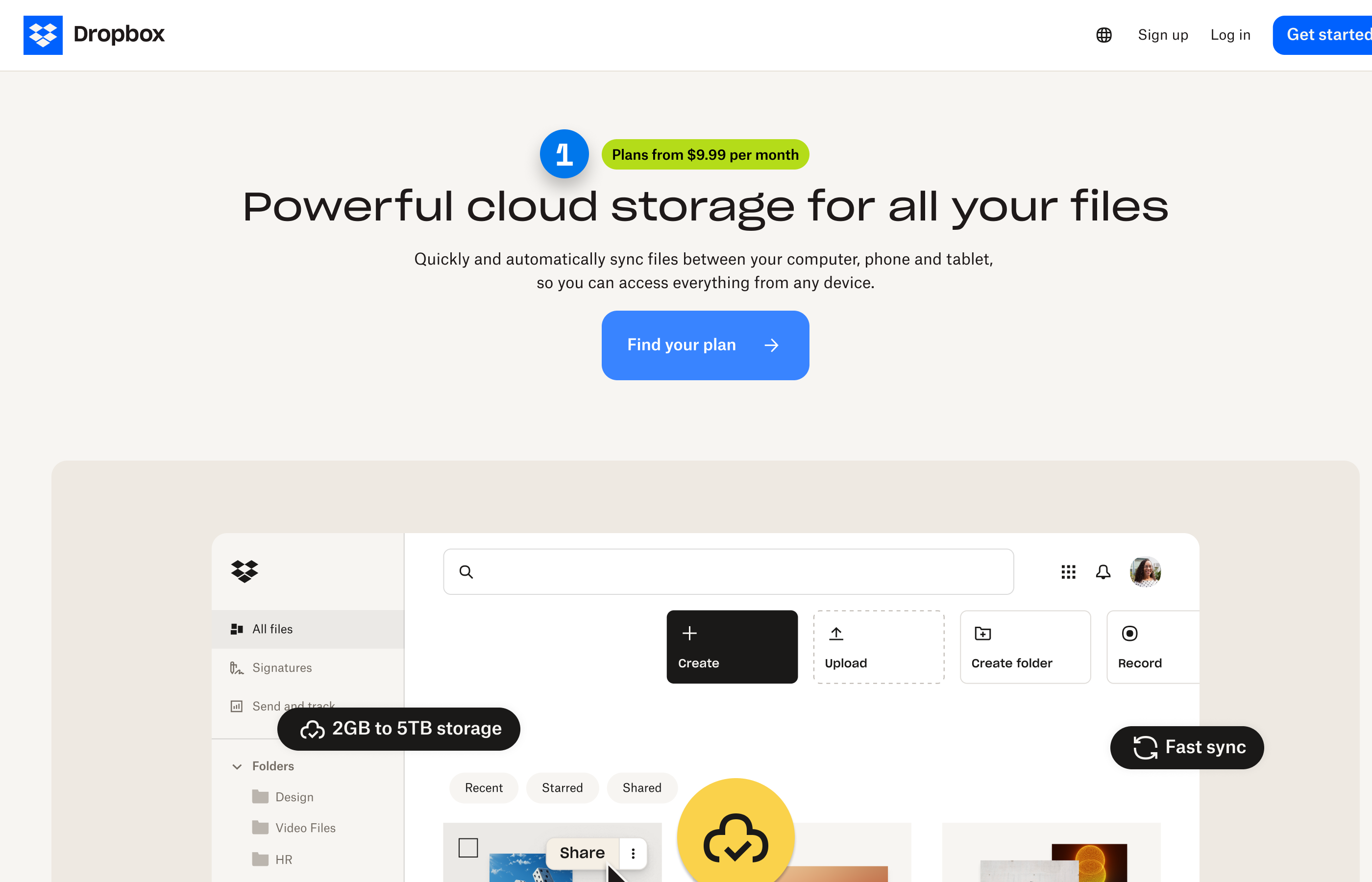
Price surfaced in the hero before any other commitment.
Feature pills overlaid on imagery
User testing flagged two things about the existing imagery: it played a key role in first impressions, and it lacked context to communicate what the product actually did. We couldn’t change the imagery itself within the design system constraints, so we overlaid feature pills directly onto it, adding meaning without touching the component.
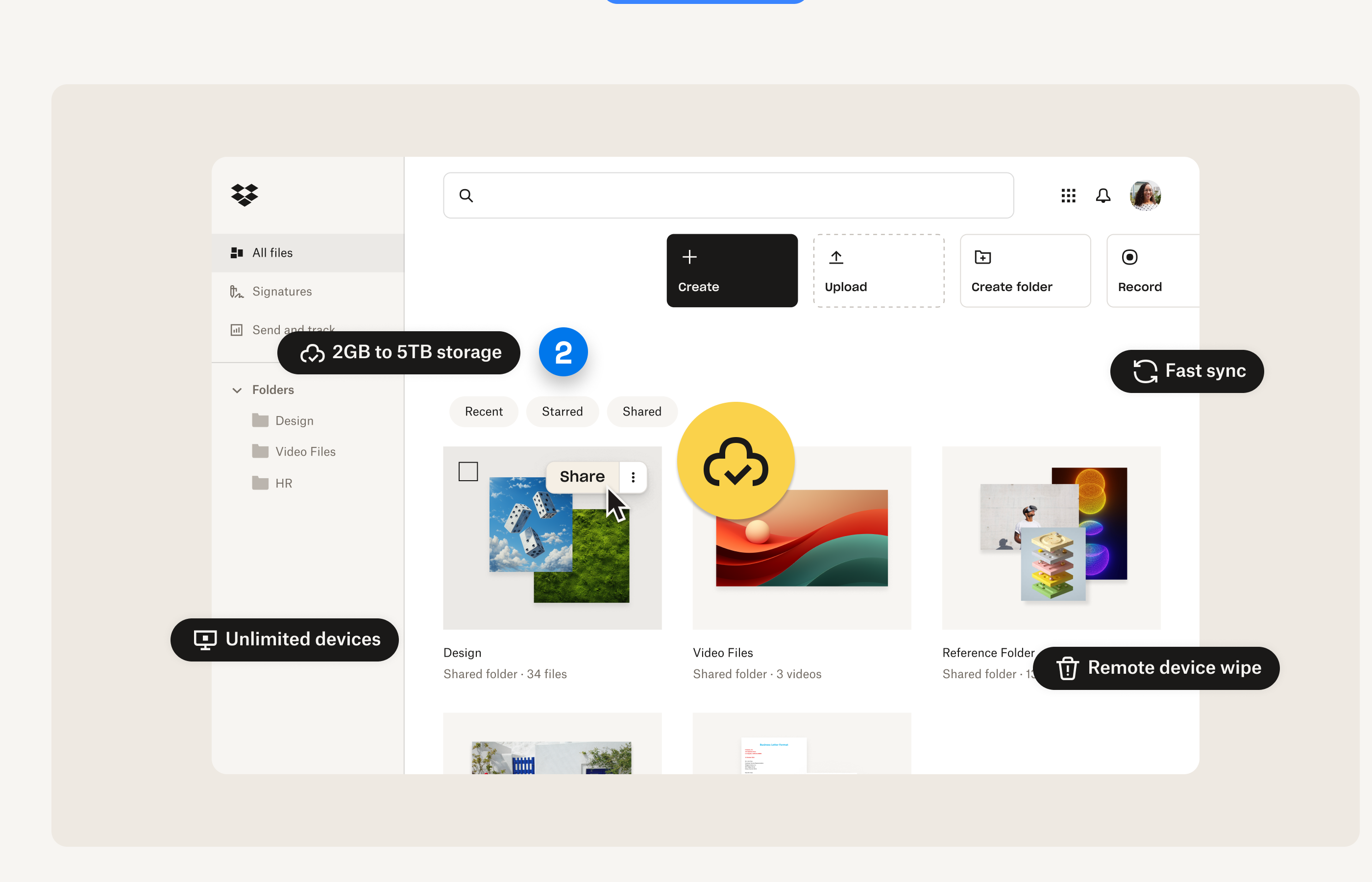
Key features overlaid directly on product imagery.
Authority stats
Testing showed users still had unanswered questions about what Dropbox offered after reading the hero. We brought in authority stats (1B+ mobile downloads, 600K+ teams and 4.5B connections) to answer those questions instantly and create a bandwagon effect for users who were still evaluating.
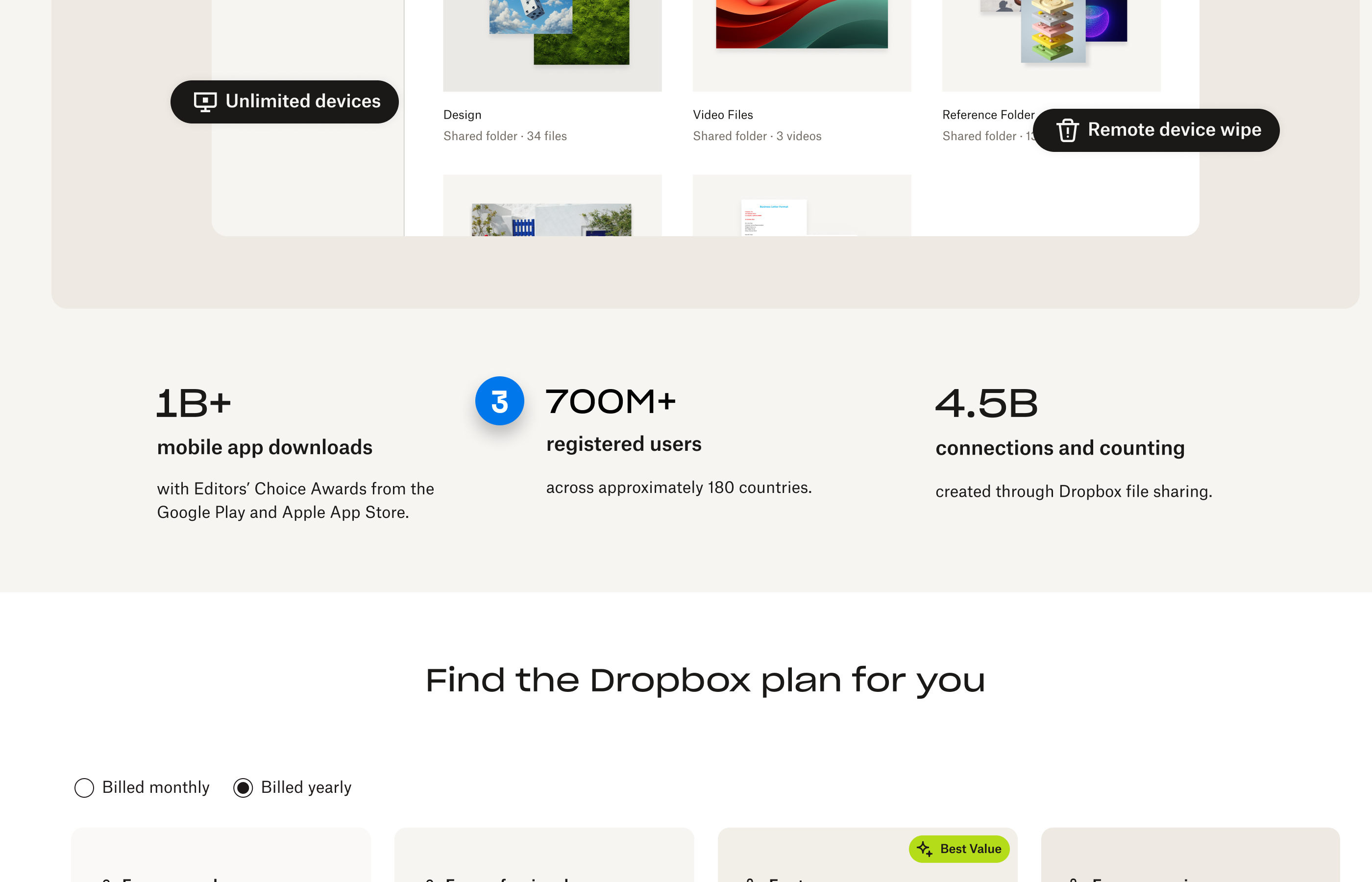
Social proof numbers placed immediately below the hero CTA.
‘Best value’ framing
Plan card engagement was already high in previous tests, as users who interacted with plans converted well. The problem was getting them to choose. We added ‘Best value’ framing to reduce decision paralysis and direct users toward the highest-value tier without adding friction.
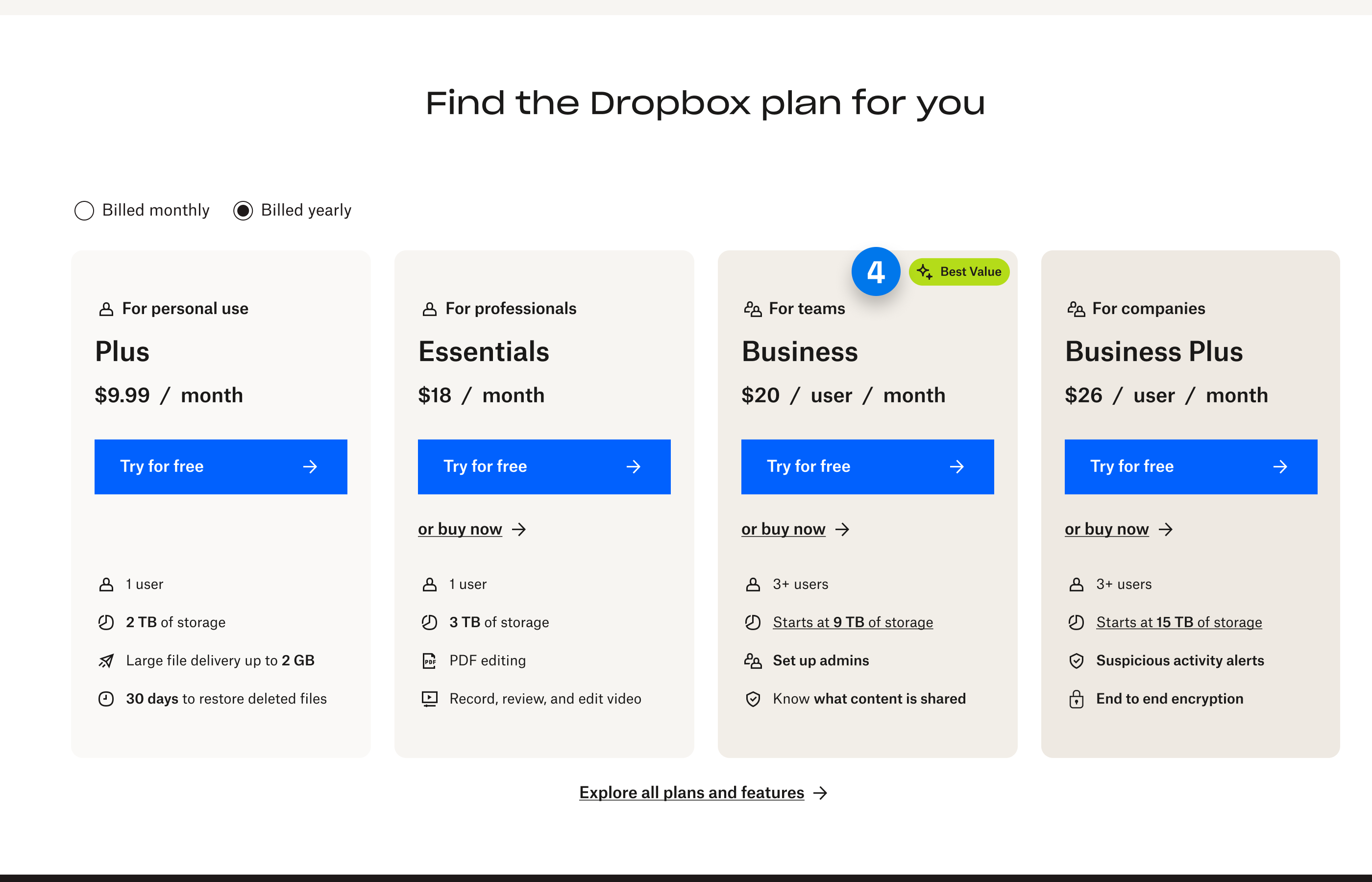
Recommended plan clearly labelled to reduce decision paralysis.
Company logos
NB SEM visitors arrive without brand familiarity, having searched a feature keyword, not Dropbox. The brief specifically called for social proof woven into the page narrative to build trust with an audience that doesn’t know the brand. Logos from recognisable companies gave users an immediate credibility shortcut.
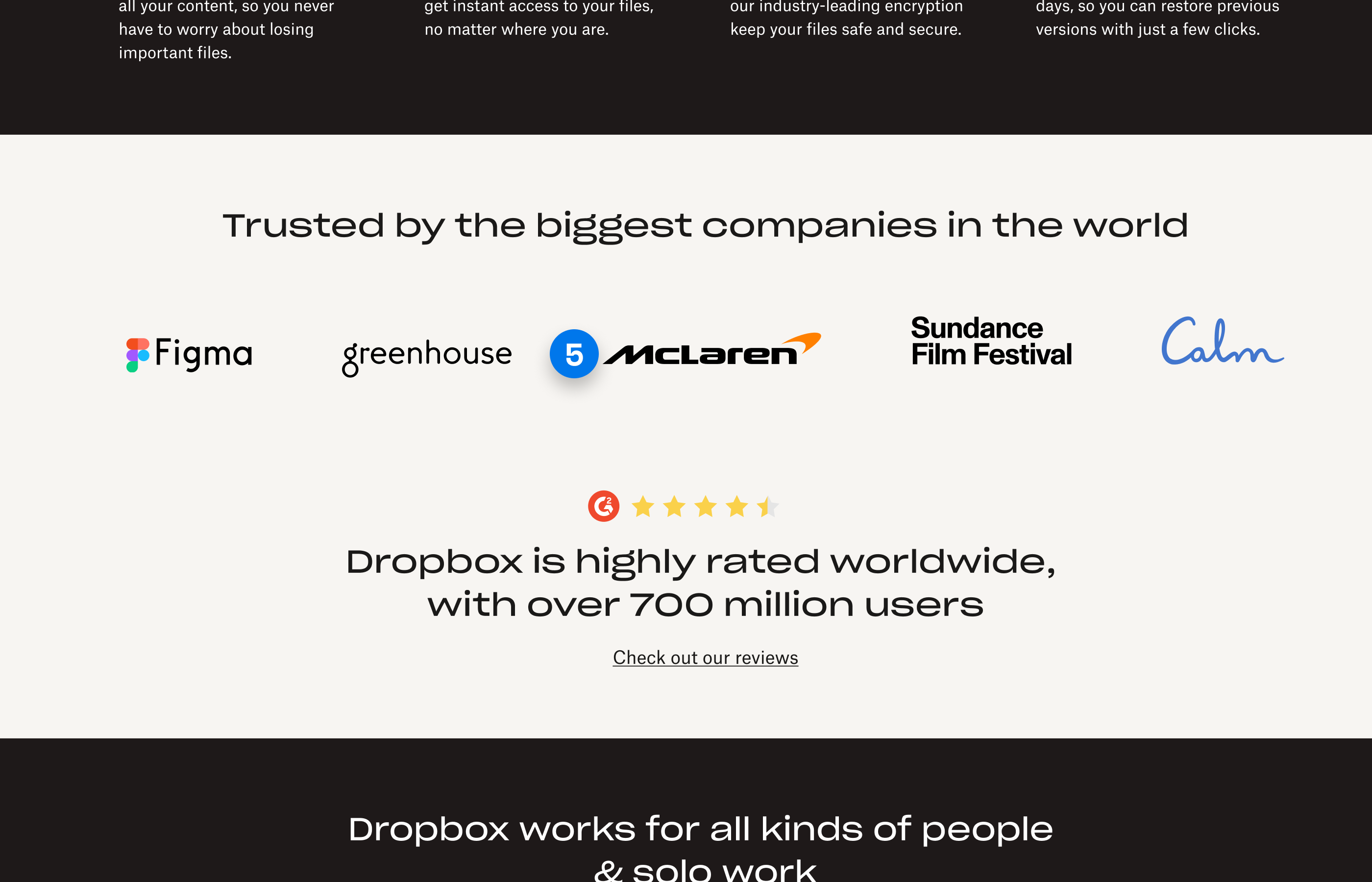
Well-known company logos positioned near the plan cards.
Persona-specific content sections
User testing highlighted that individuals and teams have fundamentally different priorities: cost, capacity and security for individuals; collaboration, ease of use and integrations for teams. The original page spoke to neither clearly. We introduced dedicated content sections for each segment so the page felt directly relevant regardless of who was reading it.
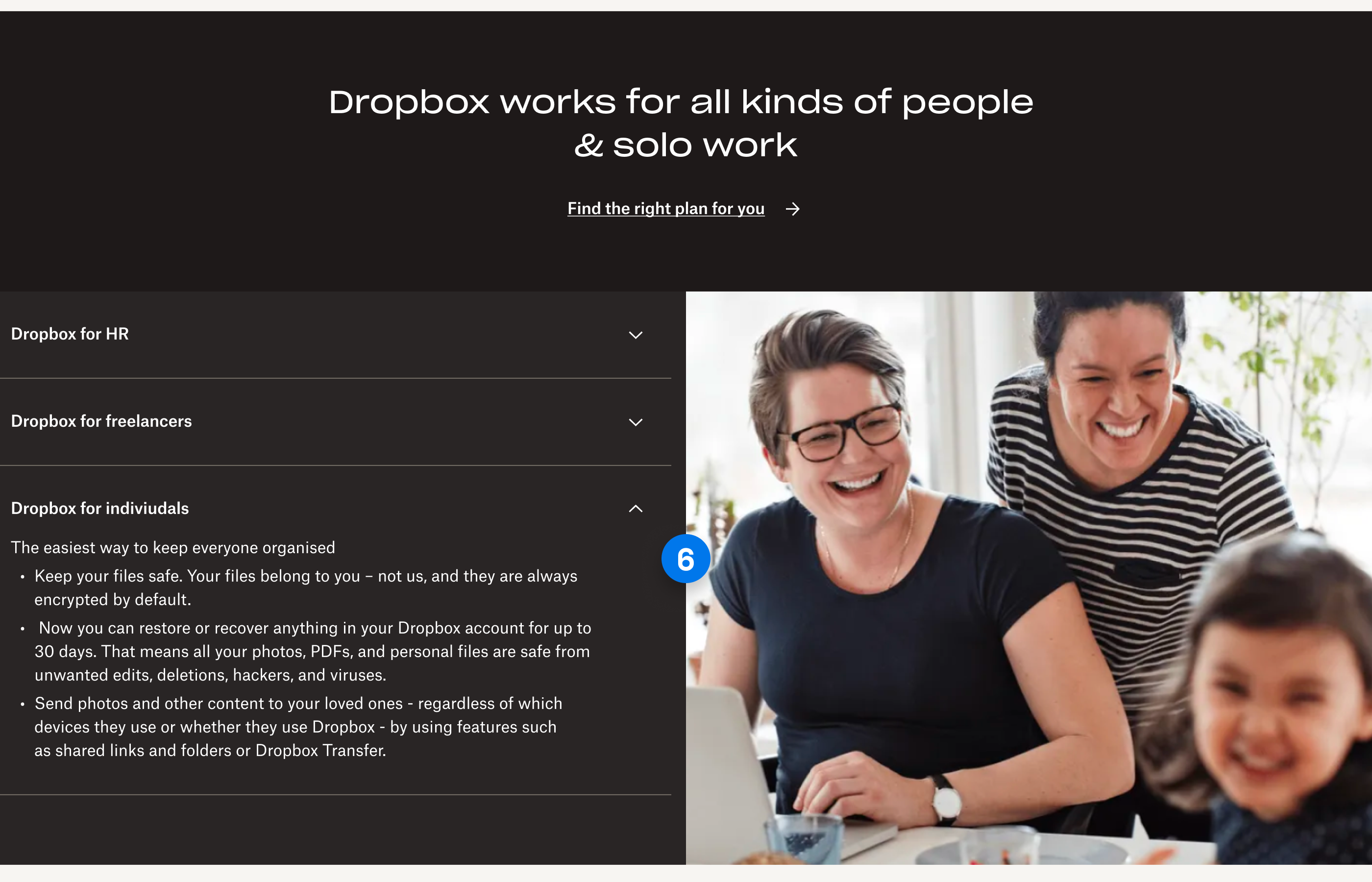
Separate content areas for each key audience segment.
After 3 months we concluded the experiment. Running in a low traffic environment meant we couldn't reach full statistical significance on every metric, but the variant showed a significant lift in Trial Starts (our primary metric) and strong directional wins across GNARR. We implemented it as the new baseline, replacing the existing page across all Dropbox non-branded SEM campaigns.
The design went on to inform the structure of subsequent campaign pages.
Next Case Study
02 /